The UAE’s digital transformation market is valued at USD 1.82 billion in 2026 – and it is growing at a compound annual rate of over 15%. From government services to banking, retail to logistics, every sector is being reshaped by technology. Yet for many organisations, one of the most visitor-facing parts of the business has barely changed in decades: the front desk.
That is starting to shift, and fast. Across Dubai, Abu Dhabi, and the wider Emirates, forward-thinking businesses are replacing paper visitor logs and manual check-in processes with smart, automated visitor management systems and the results speak for themselves. Shorter wait times, tighter security, cleaner data, and a front-of-house experience that actually reflects the calibre of the organisation behind it.
In 2026, front desk operations are no longer just about greetings and phone transfers. They are a critical part of workplace security, compliance, and the very first impression your brand makes on every visitor who walks through the door.
The Problem with Paper: Why Traditional Front Desks Are Failing
For decades, the paper visitor logbook was the standard. A visitor would arrive, write their name and purpose of visit in a shared book, and wait for someone to call up to the relevant floor. It was slow, insecure, and inefficient and in a post-pandemic world where hygiene, accountability, and data accuracy matter more than ever, it simply cannot hold up.
The issues go beyond inconvenience. A shared visitor log exposes personal data to every subsequent visitor who flips through the page. There is no way to instantly verify identity, screen against a watchlist, or notify a host automatically. And in the event of an emergency evacuation, there is no reliable record of who is actually inside the building.
These aren’t hypothetical concerns. They are real operational risks that forward-thinking UAE businesses are actively working to eliminate.
How a Modern Visitor Management System Works: A Step-by-Step Look
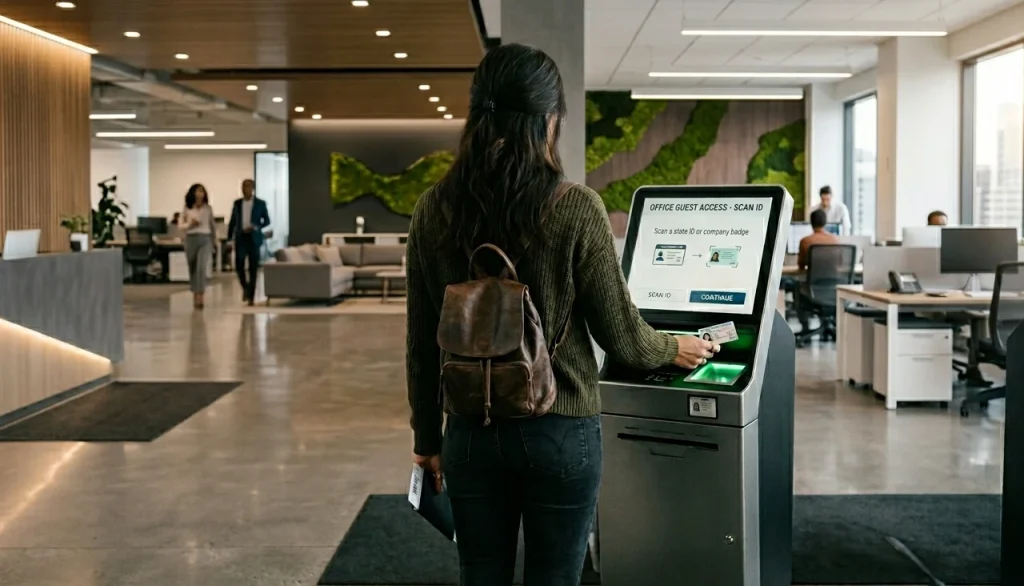
A modern visitor management system replaces all of that friction with a seamless, secure, and professional check-in experience. Here is how it typically works in practice and why each step matters.
1. Emirates ID and Passport Scanning
A visitor arrives at reception and approaches a self-service kiosk. Rather than typing in their details manually, they simply scan their Emirates ID or passport. The system reads and captures their information automatically – name, nationality, ID number in a matter of seconds. This eliminates transcription errors, speeds up the process considerably, and ensures that every record in the system is accurate and complete.
For UAE-based businesses, Emirates ID scanning is particularly important. It aligns with the country’s national identity infrastructure and provides a reliable, verified data point for every visitor record. There is no ambiguity about who was on the premises and when.
2. Automated Host Notifications via SMS and Email
The moment a visitor completes check-in, their host receives an automatic notification — by SMS, email, or both. No receptionist needs to pick up the phone, send a message manually, or track someone down in the building. The alert goes out instantly, with the visitor’s name, photo, and arrival time included.
This single feature eliminates one of the most common friction points in office reception: the delay between a visitor arriving and the relevant person being informed. It also frees up front desk staff to focus on other tasks rather than acting as a communication relay.
3. Visitor Badge Printing
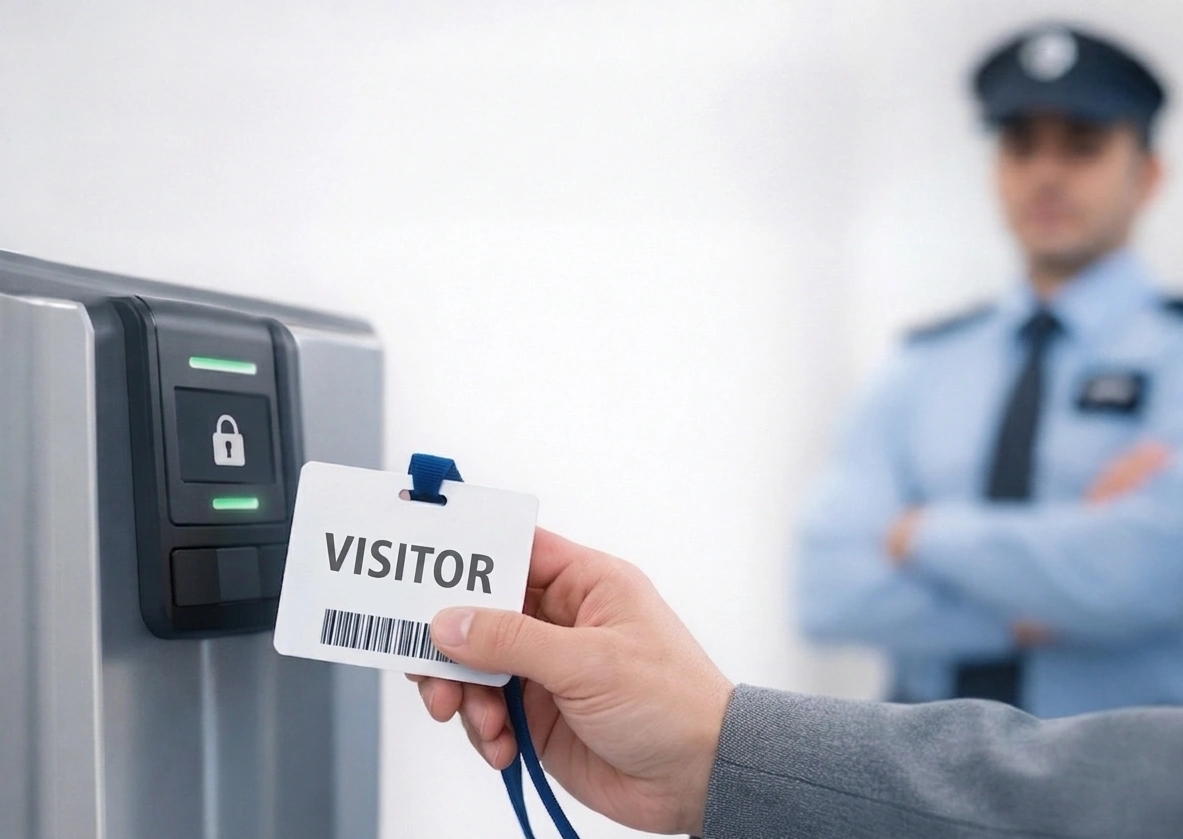
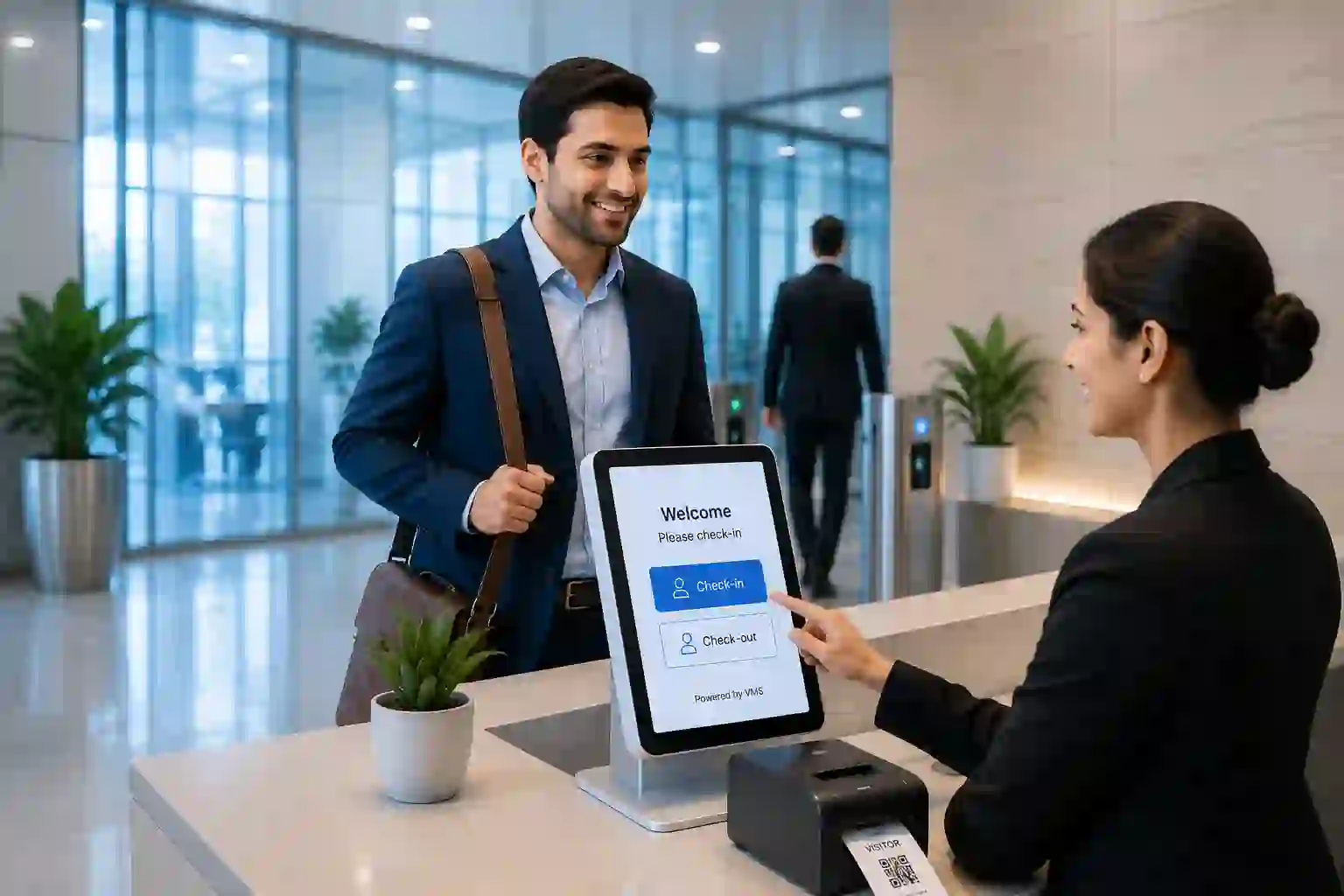
Once check-in is complete, the system automatically prints a visitor badge. The badge typically includes the visitor’s name, photo, purpose of visit, host name, and an expiry time or access zone if applicable. It is a small detail, but it carries real operational weight.
A printed badge makes it immediately visible who is a registered visitor and who is not. Security personnel can identify at a glance whether someone belongs in a particular area of the building. It also discourages tailgating and unauthorised access in a way that a simple sign-in record never could.
At IX VISPRO, all of these features come together in a purpose-built platform for the UAE market — Emirates ID and passport scanning, automated host notifications, badge printing, and a kiosk interface that visitors can navigate without any assistance. It is built for the kind of high-traffic, security-conscious environment that defines business across the Emirates.
4. Real-Time Dashboard and Instant Reporting
Behind the front desk experience sits a live analytics dashboard that gives facility managers and security teams complete visibility into who is in the building at any given moment. Check-ins, check-outs, current occupancy, visitor history — all of it is available in real time, from any device with access.
When it is time to report, the system generates detailed visitor logs instantly in both Excel and PDF formats. Whether the need is for an internal audit, a compliance review, or a post-incident analysis, the data is there and ready. This is a significant step up from paper logbooks, where compiling any meaningful report required hours of manual work — if the data was even legible.
The Self-Service Kiosk: Redefining the Reception Experience
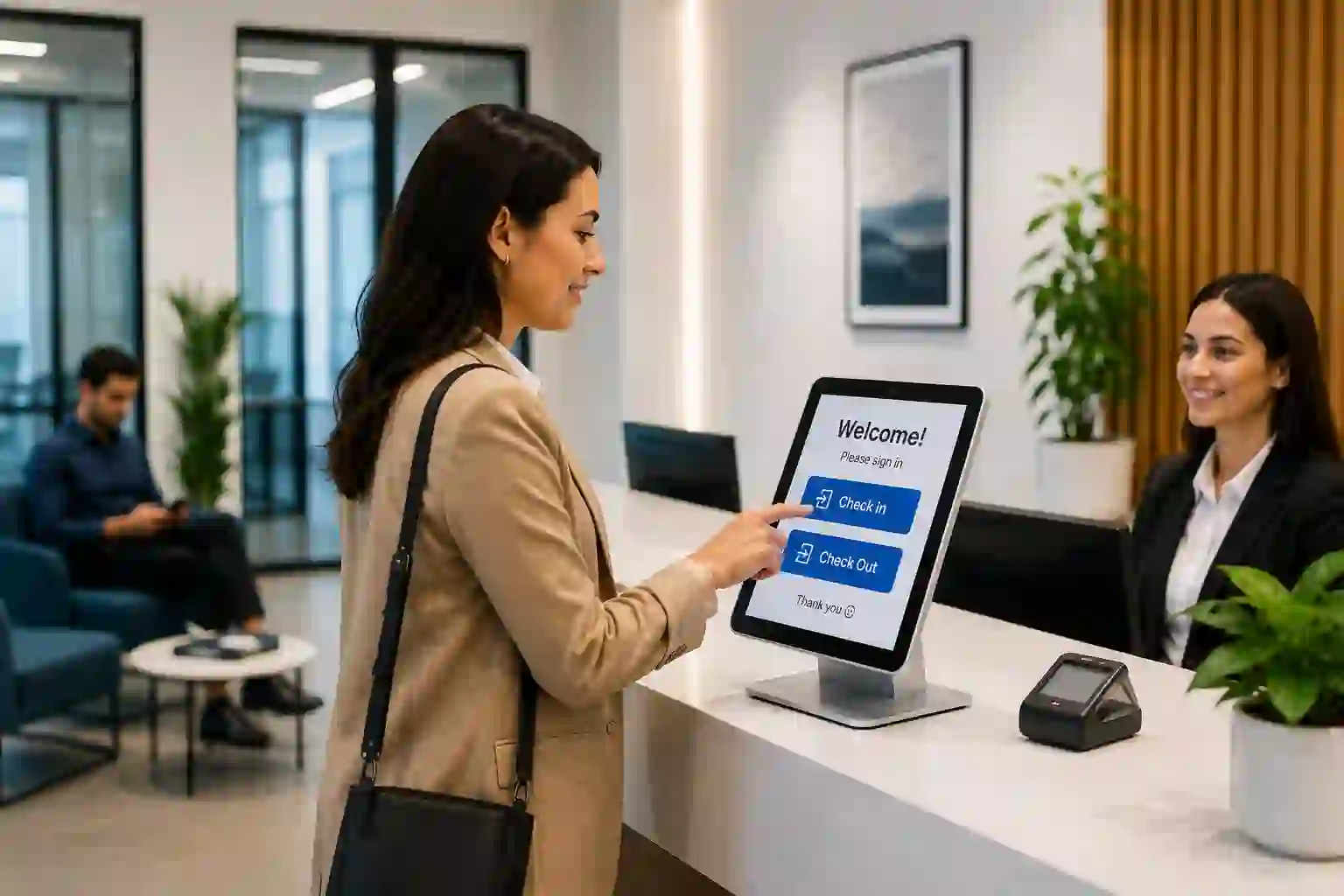
The visitor kiosk has become the centrepiece of modern front desk transformation. It does more than just process check-ins, it shifts the dynamic of reception entirely. Staff who were previously tied to a desk handling routine sign-ins can now focus on genuinely value-adding tasks, while the kiosk handles the repetitive administrative work with greater accuracy and consistency.
From a visitor’s perspective, a well-designed kiosk also signals something important: this organisation takes technology, security, and professionalism seriously. First impressions have always mattered in business, and the reception area is where they are made.
For UAE businesses specifically, kiosk-based visitor management also addresses a very practical challenge, the volume and diversity of visitors. Between clients, contractors, delivery personnel, government inspectors, and job candidates, a busy office can see dozens or even hundreds of distinct visitor categories in a single day. A smart kiosk handles all of them consistently, applying the right workflow for each type of visit without any manual configuration required at the desk.
Security, Compliance, and the Regulatory Landscape in the UAE
Workplace security in the UAE has grown significantly more rigorous over the past several years. Whether it is free zone compliance requirements in areas like DIFC and ADGM, building access regulations for government-affiliated entities, or simply the internal policies of multinationals operating in the region — the expectation is that organisations know who is in their building at all times.
A digital visitor management system makes this possible. Every check-in is logged with a timestamp, photo, and purpose of visit. Every check-out is recorded. If a visitor fails to check out by end of day, the system can generate an alert. If an individual appears on a blocked or restricted list, the system flags them before they ever gain access.
Aligning with the UAE’s National Digital Agenda
None of this is happening in isolation. The UAE’s broader national agenda has consistently prioritised smart infrastructure and digital service delivery as strategic pillars. In 2026, as Khaleej Times noted in a recent analysis, the country has moved firmly from strategy and planning into execution — with digital transformation now being measured by real operational outcomes, not just ambition statements.
For businesses operating in this environment, the pressure to modernise front-of-house operations is not just internal — it is market-driven. Clients, partners, and regulators all come through the front door, and the experience they have there shapes perceptions of the entire organisation.
Pre-Registration and QR Code Check-In: Eliminating Lobby Friction
One of the most underutilised but impactful features of a modern visitor management system is pre-registration. Rather than handling every visitor as a walk-in, hosts can register their guests in advance — before they ever arrive at reception.
Here is how it works: the host schedules a visit through the system, and the visitor automatically receives a confirmation email containing a unique QR code. When they arrive, they simply present the code at the kiosk. The system reads it, confirms the pre-approved visit, and completes check-in instantly — no form-filling, no waiting, no friction.
This is particularly valuable in a UAE business context, where organisations routinely host clients from overseas, government representatives, senior executives, and repeat vendor contacts. For these visitors, walking into a lobby and being greeted with a seamless, professional QR code check-in sets a powerful tone from the start.
It also makes a tangible operational difference. Large delegations, board meetings, or multi-day corporate events can have all attendees pre-registered before anyone arrives on site. The result is a lobby that flows smoothly even under high volume, with no bottlenecks at the kiosk and no pressure on reception staff.
Implementation: What the Transition to Digital Actually Involves
The most common concern organisations raise when considering a shift to digital visitor management is complexity — particularly around staff training, hardware installation, and integration with existing systems. In practice, modern platforms are designed to address exactly this.
IX VISPRO, for example, is built for straightforward deployment across single or multiple locations, with an intuitive kiosk interface that requires no technical knowledge from front desk staff. The system works as a standalone solution or can be integrated with access control and HR platforms depending on the organisation’s requirements.
The transition from paper to digital does not need to be disruptive. In most cases, businesses that make the switch report faster onboarding, more accurate data, and a noticeably improved visitor experience within the first week.
The Front Desk of 2026 Is a Strategic Asset – Is Yours?
The front desk is no longer just a reception point — it is a security checkpoint, a data collection node, and a brand experience all at once. In the UAE’s fast-moving business environment, organisations that still rely on paper logbooks and manual sign-in processes are not just operating inefficiently. They are also exposing themselves to real security and compliance risks that digital systems are specifically designed to eliminate.
Whether you are managing a single-site office or a network of facilities across the Emirates, the time to modernise front desk operations is now. The technology exists, it is proven, and it is designed for exactly the kind of high-traffic, security-conscious environment that defines business in the UAE.
Ready to see what a modern visitor management system looks like in practice? Book a demo with IX VISPRO and discover how smart check-in and kiosk technology can transform your front desk operations.