
It takes less than 60 seconds. A confident stranger walks into a corporate lobby, signs a paper logbook with a name no one verifies, and heads straight to the 14th floor – unchallenged and completely unauthorized.
This is not a hypothetical. It happens in UAE facilities every day.
As the Emirates grows as a global business hub, the volume of visitors moving through offices, government buildings, and free zones has never been higher. More footfall means more opportunity — for business, yes, but also for those looking to exploit gaps in physical security. A single unauthorized individual in the wrong place can compromise sensitive data, threaten employee safety, and cost organizations millions of dirhams in liability and reputational damage.
Yet many UAE facilities still rely on a paper logbook, an unstaffed side entrance, and a sticky label for a visitor badge. Closing these gaps starts at the front desk, with the right processes and the right technology.
1. Move Beyond the Paper Logbook
Traditional paper sign-in sheets are a security liability masquerading as a process. They expose visitor data, are easily falsified, and make auditing nearly impossible. UAE facilities handling sensitive operations — finance, healthcare, government, or critical infrastructure — must transition to digital visitor management systems (VMS).
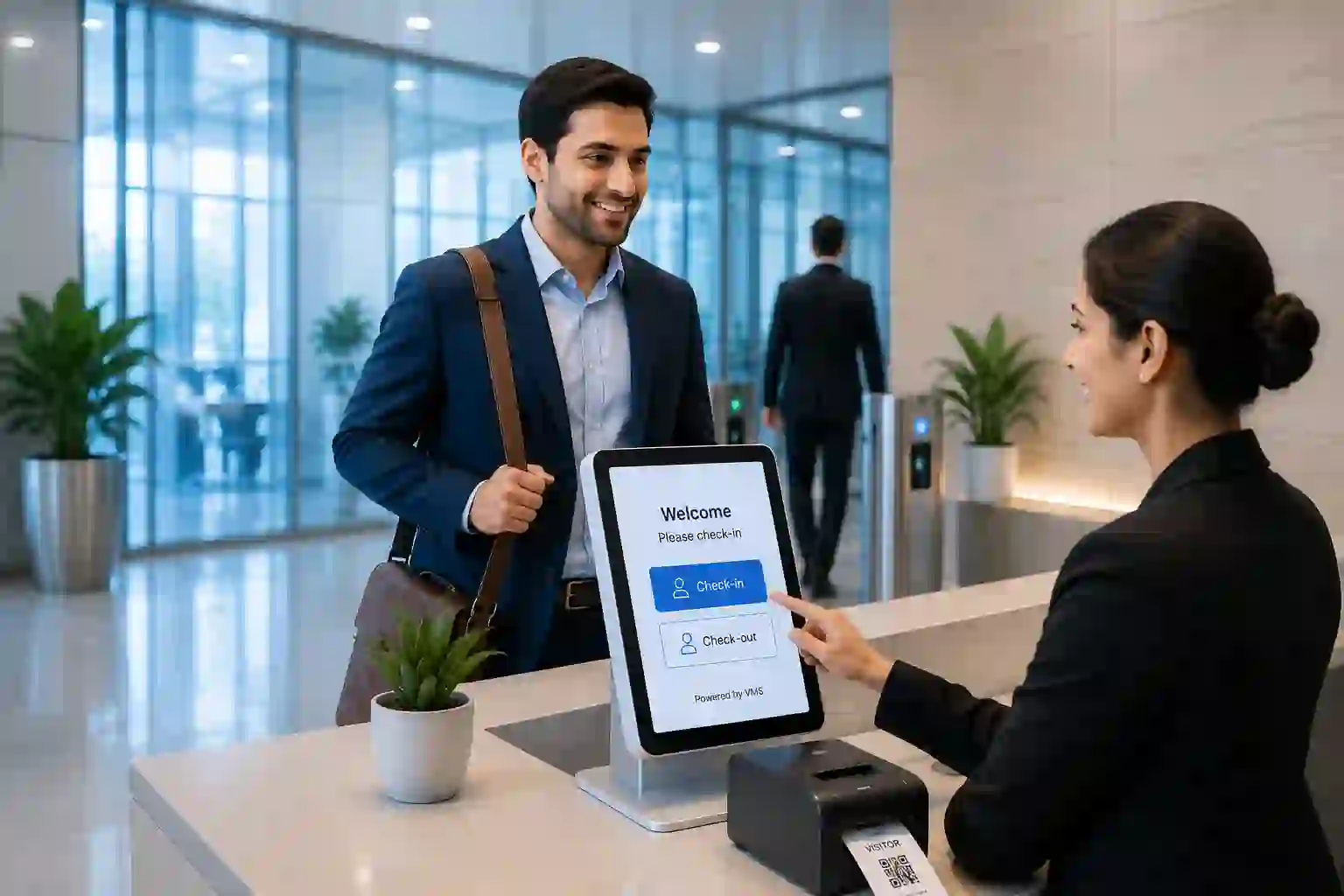
A modern VMS like IX VISPRO captures visitor details digitally, verifies identity against pre-approved lists, creates tamper-proof logs, and enables real-time visibility of who is on your premises at any moment. This is not just a convenience — in many UAE sectors, it is rapidly becoming a compliance requirement.
2. Implement Pre-Registration and Host Approval Workflows
One of the most effective ways to prevent unauthorized access is to stop it before it starts. Pre-registration workflows require hosts to submit visitor details — full name, Emirates ID or passport number, purpose of visit, and expected duration — before the visitor arrives.
Benefits of pre-registration include:
- Security teams can screen visitors against watchlists before arrival
- Receptionists can verify identity instantly upon arrival — no delays, no guesswork
- Unannounced visitors trigger automatic alerts for security review
- Management has a clear audit trail of all approved and denied entries
3. Verify Identity with UAE-Compliant ID Scanning

The UAE has one of the world’s most sophisticated national identity infrastructure systems. Facilities should leverage this by integrating Emirates ID scanning into their visitor check-in process. This instantly captures accurate visitor data, reduces manual entry errors, and creates a verifiable record aligned with UAE data standards.
For international visitors, passport scanning with MRZ (Machine Readable Zone) reading should be the standard. Leading systems like IX VISPRO support both, ensuring your security process is consistent regardless of a visitor’s nationality.
4. Issue Time-Bound, Zone-Specific Access Badges
Not all visitors should have access to the same areas. A vendor servicing the IT room does not need access to executive floors. A job candidate attending an interview should not be able to wander into the server room. Access control must be granular.
Visitor badges should be printed automatically upon check-in, clearly displaying the visitor’s name, photo, host name, permitted zones, and — critically — an expiry time or date. Integrating your VMS with physical access control systems (PACS) ensures that a visitor’s badge digitally restricts access to only their approved zones. This prevents tailgating and ensures visitors cannot remain in restricted areas beyond their permitted duration.
5. Conduct Real-Time Watchlist Screening
For high-security UAE facilities — particularly those in finance, government, and critical infrastructure — visitor screening against internal or regulatory watchlists is essential. A robust VMS should automatically cross-check visitor details against:
- Internal denied-entry lists (former employees, known threats)
- Sanctions and compliance databases
- Custom security flags set by the facility’s security team
When a match is flagged, the system should immediately alert security personnel and hold the visitor at reception — discretely — pending review. This process should be seamless and non-disruptive to legitimate visitors.
6. Enforce Visitor Checkout and Overstay Alerts
A visitor who checks in but never checks out is a security gap. Many facilities focus heavily on entry but neglect exit management. Your VMS should automatically track visitor duration and trigger alerts when a visitor exceeds their approved time on site.
Automated checkout reminders can be sent to hosts, and security can be notified for overstays. For high-security zones, turnstile integration ensures visitors cannot bypass the checkout process entirely.
7. Maintain Compliance with UAE Data Protection Regulations
The UAE’s Federal Decree-Law No. 45 of 2021 on Personal Data Protection (PDPL) places clear obligations on how organizations collect, store, and process personal data — including visitor information. Your visitor management system must:
- Obtain informed consent from visitors for data collection
- Store visitor data securely with defined retention periods
- Enable data deletion upon request in compliance with PDPL requirements
- Provide audit logs accessible to compliance officers and regulators
Non-compliant visitor management processes can expose your organization to regulatory penalties and reputational damage — risks that far outweigh the cost of upgrading your systems.
8. Train Frontline Staff and Foster a Security-First Culture
Technology alone cannot prevent unauthorized access. Your reception team, security guards, and even regular employees all play a role in maintaining a secure environment. Regular training should cover:
- Recognizing social engineering tactics (tailgating, impersonation)
- Properly challenging unescorted visitors in restricted areas
- Using the VMS correctly to log all entries and exceptions
A well-trained team backed by smart technology is your strongest line of defense.
Conclusion: Secure Facilities Start at Reception
In the UAE’s fast-evolving security landscape, preventing unauthorized access is not a one-time project — it is an ongoing operational discipline. From digital check-ins and identity verification to real-time alerts and compliance-ready audit trails, every element of your visitor management process contributes to the overall security posture of your facility.
IX VISPRO is purpose-built for UAE facilities, combining intelligent visitor workflows, Emirates ID integration, and enterprise-grade security features into one seamless platform. Whether you manage a single corporate office or a multi-site enterprise, IX VISPRO gives you the visibility and control to keep your premises safe.
Ready to upgrade your visitor management? Contact IX VISPRO Visitor Management to learn more and book a free demo today.